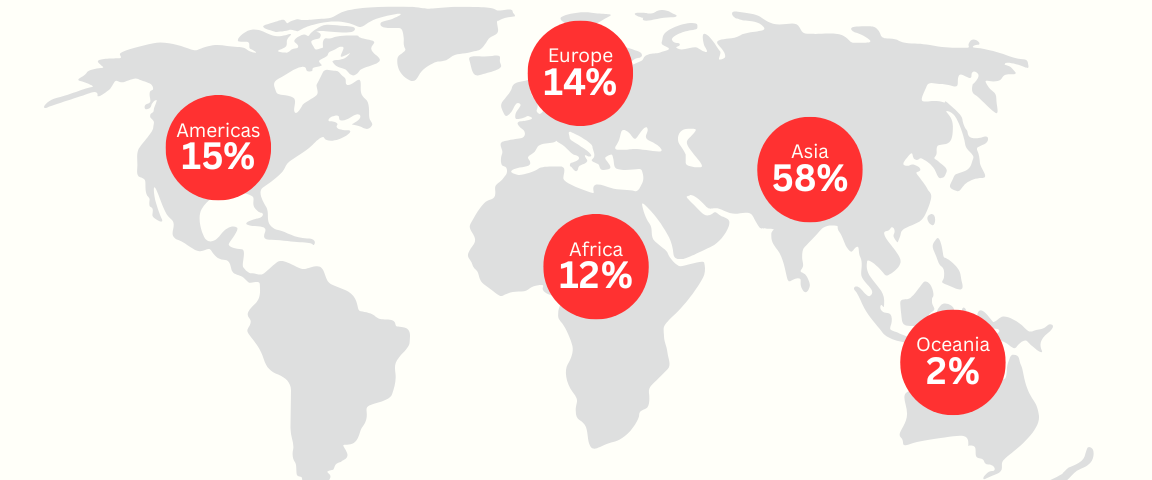

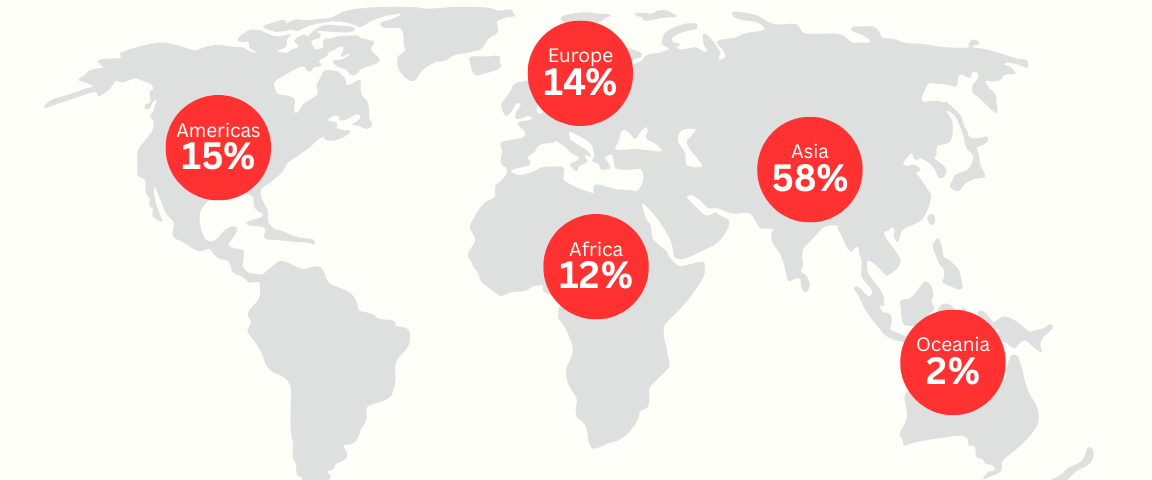

The international schools sector has crossed a major milestone. ISC Research reports there are now 15,075 English-medium international schools worldwide, educating 7.7 million students, employing around 730,000 staff, and generating $69.3 billion USD in annual fee income.
That scale matters if you are an international teacher, HR lead, or school administrator, because a bigger sector creates more openings, but also sharper competition, more standardised hiring, and new expectations around student support and wellbeing.
What’s shaping the international schools market in 2026
The latest data points to three forces that are changing how international schools grow and how they hire: localisation and bilingual expansion, the digital assessment pivot, and continued market consolidation through school groups.
This is the part many people miss when they only look at school counts. The sector is not just expanding. It is maturing into a more systemised, networked market, where schools increasingly operate with shared standards, shared expectations, and shared processes.
The biggest hiring markets are not changing, but they are getting more competitive
ISC Research’s latest numbers show the top five countries by international school count are:
- China 1,117
- India 991
- UAE 898
- Pakistan 701
- Indonesia 465
For teachers, that usually means there are more total vacancies across a wider mix of cities and school types, but also a bigger spread in salary and benefits depending on the country, city, ownership model, and whether the school is part of a group. It also means schools are placing more weight on proven classroom impact and long term fit, not just qualifications on paper.
For HR and admin teams, it means the overall hiring volume may stay high, but maintaining quality becomes harder as competition increases. In many cases, stronger onboarding and retention systems end up making a bigger difference than simply doing more sourcing.
Localisation and bilingual expansion is now a core driver
One of the clearest shifts in the research is that international education growth is now driven primarily by local family demand, not expat mobility.
That helps explain why bilingual and blended models have grown so quickly. Today, 36% of international schools offer bilingual provision, and 78% offer hybrid curricula, blending global programmes with national requirements, language, and cultural context.
The same dataset also shows a 17% increase in schools offering bilingual pathways, reinforcing how fast this shift is accelerating.
For teachers, this changes what “being a strong candidate” looks like. Even if you are not an EAL specialist, schools want to see that you can support language development in your subject, scaffold effectively, and communicate learning clearly to parents who are investing heavily in “international outcomes.” It also raises expectations around consistency, because hybrid models often require tighter alignment, shared planning, and clearer evidence of progress.
For school leaders and HR teams, localisation typically increases complexity. Parent expectations become more outcome-driven, student needs become more diverse (academically and linguistically), and the school’s operating model has to handle more pathways at once. That is why many schools are adding roles that stabilise delivery across the school, including EAL support, learning support, pastoral and wellbeing, bilingual programme coordination, and curriculum integration roles.
School groups are shaping recruitment more than ever
Another important takeaway is how quickly group-led expansion is becoming the default model. Around 38% of international schools already belong to a school group, and 56% of future schools in development are group-affiliated.
This is also tied to a wider move toward scale and consistency, with consolidation pushing more schools toward standardised operating models and more professionalised recruitment and HR practices.
For teachers, the upside is often clearer structures and clearer expectations. Recruitment processes tend to be more consistent, interview stages more standardised, and performance expectations more explicit. There can also be more mobility once you are inside a group, because networks can move staff between campuses as new schools open or enrolment shifts.
For HR and admin, this is one of the biggest reasons recruitment feels more like “talent operations” than “hiring when needed.” Shared ATS systems, consistent role grading, centralised screening, and safer recruitment compliance become non-negotiables, because scale demands repeatable systems. It also increases the importance of documentation readiness, because onboarding speed and compliance can be a competitive advantage when multiple schools are hiring at once.
Digital assessment is moving from pilot to rollout
A second big operational shift is assessment. The research points to assessment moving toward digital and competency-based models, with major awarding bodies shifting from pilots to phased digital rollouts.
This matters for staffing because it increases demand for teachers and leaders who can run digital assessment reliably, protect academic integrity, use data well, and translate evidence into targeted intervention. It also increases pressure on operations and IT coordination, because the smooth delivery of assessment is now part of the school’s reputation and parent confidence.
Growth is also coming from “markets to watch”
Beyond the traditional hubs, the snapshot highlights UAE, India, and Kazakhstan as markets to watch, reflecting where confidence and expansion plans are strong.
In the UAE, for example, the data notes the country leads globally with 36 future schools planned, supported by long-term strategies such as the D33 Agenda and Plan 2030, and sustained demand for school places, including waiting lists across grade levels.
For candidates open to less familiar destinations, these kinds of markets can offer outsized opportunity, especially for experienced teachers, middle leaders, and operational hires who can build systems, mentor teams, and stabilise delivery while a school grows.
Practical takeaways if you are applying or recruiting this year
For international teachers, the direction is clear. Bring evidence, not just a CV. Be ready to talk through student progress, planning choices, differentiation, and how you support multilingual learners inside your classroom. In a market where bilingual provision (36%) and hybrid curricula (78%) are increasingly common, you will stand out if you can explain how you teach effectively across mixed language proficiency and across blended curriculum requirements, because that is now the daily reality in many schools.
Also expect structured hiring. With school groups expanding and standardised operating models becoming the norm, interviews increasingly use rubrics, scenario questions, and multi-stage processes designed to reduce hiring risk and improve consistency.
For HR, operations, and school admin roles, the strongest advantage is predictability. Build pipelines early, standardise where it reduces risk, and treat onboarding as part of recruitment rather than an afterthought. As the sector becomes more locally embedded and more group-led, the schools that win are those that can hire with consistency, onboard smoothly, and retain well, because that is what protects quality while the market scales.
Bottom line
Passing 15,000 international schools is not just a headline statistic. It signals that the sector has moved into system-level scale, with more local demand, more bilingual and hybrid models, more group-led expansion, and more standardised operations.
For teachers and school staff, that means more opportunities in absolute numbers, but also a higher bar: clearer expectations, more structured hiring, and greater emphasis on consistency, measurable impact, and readiness to operate in multilingual, data-driven school environments.